
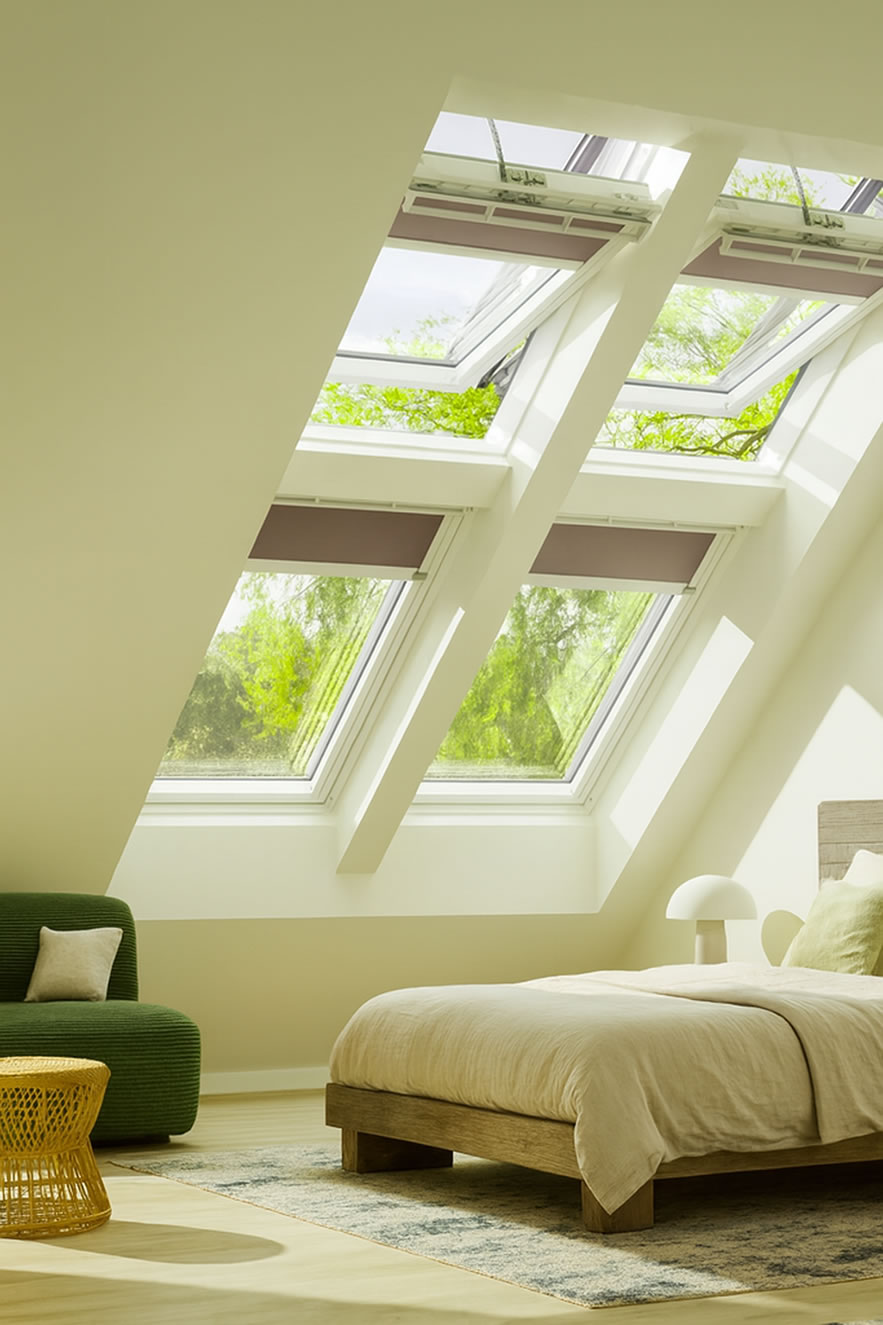
Roof windows are one of the most effective ways to revitalise a space, especially in homes where light is limited. Among the many brands available, VELUX remains the most trusted name for reliability, sleek design and long-term performance. Whether you’re creating a new loft room, upgrading an old extension, or looking to brighten up interior spaces, VELUX offers a solution for almost every layout and roof type.
This guide takes you through the essentials: different window styles, pricing, installation considerations, planning and conservation rules in the UK, and what to do if your VELUX window needs a repair.
Why Homeowners Choose VELUX
VELUX products have earned a strong reputation thanks to their blend of practicality and stylish design. Homeowners value them because they offer:
- Exceptional daylight without the need for major structural works
- Improved airflow, helping regulate humidity and reduce damp
- Multiple glazing choices to suit energy efficiency goals
- A wide range of designs, from simple roof windows to balcony-style systems
- Durable materials built to handle UK weather
- Optional smart controls for hands-free opening and climate management
VELUX windows elevate both the comfort and appearance of almost any room.
Popular VELUX Window Styles (Side-by-Side Comparison)
| Window Style | Where It Works Best | Key Features | Typical Price (Window Only) |
|---|---|---|---|
| Centre-Pivot | Lofts, hallways, bedrooms | Simple operation, great ventilation, rotates for cleaning | £350–£900 |
| Top-Hung | Attics with views | Opens outward for space and panoramic visibility | £500–£1,200 |
| CABRIO Balcony System | High-end loft conversions | Opens into a balcony for extra outdoor feeling | £2,000–£3,500 |
| Roof Terrace Window | Loft-to-terrace designs | Enables access onto rooftop areas | £3,000–£5,000 |
| Flat Roof Windows | Single-storey extensions | Modern rooflight look with flat, curved or domed glazing | £900–£2,500 |
| Sun Tunnels | Enclosed or windowless rooms | Brings sunlight through reflective tubing | £350–£850 |
VELUX Pricing & Installation Costs
The overall cost depends on the window model, glazing choice, roof structure and finishing work required. Below is a general UK cost guide:
| Product Type | Supply Only | Installed Price |
|---|---|---|
| Centre-pivot | £350–£900 | £800–£1,800 |
| Top-hung | £500–£1,200 | £1,000–£2,200 |
| Flat roof rooflight | £900–£2,500 | £1,500–£3,500 |
| Sun tunnel | £350–£850 | £700–£1,400 |
| CABRIO balcony | £2,000–£3,500 | £4,000–£7,000 |
Installers may charge extra for internal boarding, trimming, plastering or scaffolding.
Planning Permission: Do You Need It for VELUX Windows?
In most cases, no. VELUX windows usually fall under Permitted Development rights in England and Wales. You’re normally fine to proceed without planning permission if:
- The window doesn’t project more than 150mm from the roof surface
- Its highest point stays below the roof ridge
- Side-facing windows use obscure glazing and open 1.7m or higher above floor level
Planning permission may still be needed if:
- Your property sits in a conservation area or similar protected zone
- You want to fit a balcony, terrace window or any structure altering the roof shape
- Permitted Development rights were removed when your home was built
If the project affects the building’s exterior appearance significantly, checking with your planning department is recommended.
Special Rules for Conservation Areas
Conservation areas aim to preserve the architectural character of a neighbourhood. This doesn’t rule out VELUX windows, but it does influence their style and placement.
Often encouraged in conservation areas:
- Recessed, flush-fitting roof windows resembling traditional rooflights
- Dark or black external frames that blend with slate or tile
- Minimalist designs that don’t draw attention
Likely to require permission:
- Windows on prominent roof slopes facing public roads
- Rows of multiple rooflights
- Balcony or roof-terrace systems
Each area has its own guidelines, so checking ahead prevents delays.
Glazing Options & Energy Performance
VELUX offers several glass configurations to improve comfort and energy efficiency:
- Standard double glazing – good insulation and noise reduction
- Triple glazing – best for energy-conscious homes
- Enhanced acoustic glazing – perfect for busy streets
- Solar-control glazing – limits heat gain in summer
- Laminated safety glass – safer for lower-level installations
Most windows also come with insulation frames to reduce heat loss around the edges.
Choosing the Right Installer
To ensure your window performs as intended, it’s important to hire a trained professional. Look for installers or roofers near me who are:
VELUX Certified Installers
Professionals vetted and trained specifically by VELUX.
FENSA or CERTASS Approved
Helps ensure compliance with building regulations.
TrustMark Registered
Indicates government-endorsed standards of workmanship.
NFRC Members
Useful when roofing work is more complex.
Where VELUX Windows Make the Biggest Difference
VELUX windows are incredibly versatile and can uplift almost any part of a home. Popular placements include:
- Converted loft bedrooms – adds daylight and improves ventilation
- Open-plan kitchen extensions – especially with flat roof windows
- Staircases and landings – helps brighten darker internal zones
- Bathrooms – reduces damp by improving air circulation
- Home offices – boosts natural light and productivity
Thoughtful positioning can completely change a room’s atmosphere.
VELUX Repairs: Common Issues & Solutions
Even well-made windows experience wear over time. Older VELUX units may develop small leaks, foggy glass, draughts or stiff opening mechanisms. The good news is that many issues can be repaired instead of replaced.
Common repair options include:
- Upgrading or replacing glazing units
- Renewing flashing kits around the roof
- Replacing worn gaskets, seals or hinges
- Adjusting or servicing older frames
- Repairing minor leaks before they worsen
Getting a roofer for a professional assessment can determine whether Velux repairs or replacement is the best route, especially for windows approaching the 20–30-year mark.
Frequently Asked Questions
How long does a VELUX window last?
Most VELUX windows last 20–30 years, and repairs can extend their lifespan even further.
Does a VELUX window make a room brighter?
Yes—roof windows bring in significantly more daylight than a similar-sized wall window.
Can you install blinds on VELUX windows?
Yes. VELUX provides blackout blinds, thermal blinds, solar blinds and insect screens.
What’s the typical installation time?
A standard roof window can often be installed within half a day.
Are VELUX windows repairable?
In most cases, yes. Foggy glass, leaks, and mechanism issues can usually be fixed.